Captain Meeks shares personal observations from his individual career and experience on the interview side. He is not speaking on behalf of Southwest Airlines, and this content has not been reviewed or endorsed by Southwest Airlines.
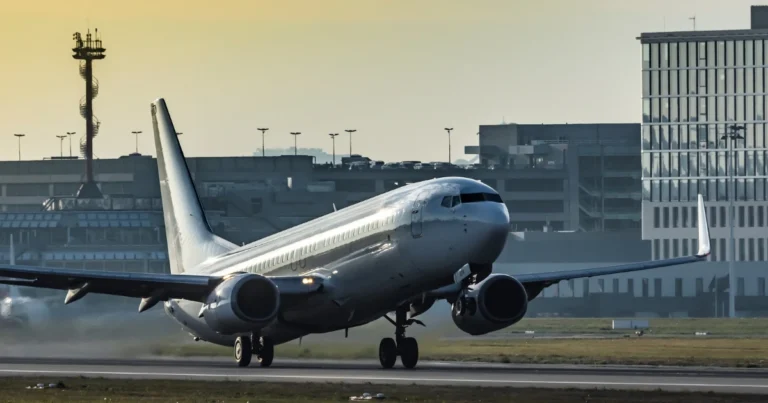
The night NKS1833 cleared the runway at Dallas-Fort Worth, somewhere a Spirit pilot keyed the mic and signed off for the last time. By morning, May 2, 2026, Spirit Airlines was gone.
Two bankruptcies in less than a year. A $500 million federal bailout that fell apart in the final hours. Round after round of furloughs, captain demotions, and a fleet that shrank from 214 airplanes down to about 96. On top of all that, fuel prices climbed sharply this spring as overseas conflicts shook global energy markets. The airline that helped train a generation of low-cost pilots is now a chapter in aviation history.
Roughly 2,000 pilots and around 17,000 direct and indirect employees woke up this weekend without a job.
I’m not going to pretend I know what that feels like. So let me say what I do know.
I’ve spent years at one airline, and I’ve never had to live through a closure of my own. But I’ve sat for 10+ years on the other side of the interview table, watching pilots from carriers that didn’t make it walk back into the industry. I’ve watched many of them become strong hires at major carriers. Not because the closure was a stamp of approval. Because of how they handled what came next.
So this isn’t a piece for the news cycle. This is what I’d be telling you if you were sitting across from me at a coffee shop tomorrow morning.
The Real Picture: Who Is Now on the Market
Before we talk about the next move, here’s what actually happened to who.
| Category | Detail |
| Pilots Affected | About 2,000 active pilots, all ALPA-represented |
| Total Employees Affected | About 17,000 direct and indirect (around 15,000 direct) |
| Fleet at Closure | About 96 Airbus A320-family aircraft (down from 214 at peak) |
| Aircraft Types | A319, A320, A320neo, A321, A321neo |
| Final Flights | May 1, 2026 |
| Operations Ceased | Morning of May 2, 2026 |
| Second Bankruptcy Filed | August 29, 2025 |
That number, 2,000, sounds smaller than it should. Spirit’s pilot group had already been pared back through three rounds of furloughs and a captain downgrade cycle in October 2025. At its peak, Spirit operated more than 200 aircraft and a significantly larger pilot group. By the time the airline closed, the group flying the line had been bracing for impact for over a year.
But this is still one of the largest single-event pilot displacements in recent U.S. aviation history.
Where Spirit Airlines Pilots Called Home
Spirit ran one of the most geographically distributed pilot domicile networks of any ultra-low-cost carrier in the country. Built for high-frequency, point-to-point flying across the Sun Belt and major metros.
Here’s where Spirit’s pilots were based:
FLL, Fort Lauderdale, FL. Spirit’s largest base, the corporate headquarters, and the deepest concentration of senior pilots.
MCO, Orlando, FL. Second-largest. Heavy leisure market. Trended senior in the months leading up to closure.
LAS, Las Vegas, NV. Third-largest. Historically one of Spirit’s junior bases. New hires often started here.
DTW, Detroit, MI. Mid-sized base. Anchor for Spirit’s northern route structure.
DFW, Dallas/Fort Worth, TX. Competitive base with longer hold times. Trended more senior.
IAH, Houston, TX. Newer base added to support Sun Belt expansion.
MIA, Miami, FL. Co-base with FLL. Supported Spirit’s Caribbean and Latin American flying.
ATL, Atlanta, GA. Smaller base sitting in Delta’s backyard.
EWR, Newark, NJ. Northeast operation supporting Spirit’s metro coverage.
ORD, Chicago, IL. Opened as Spirit expanded into the Midwest.
The FLL-MCO-LAS corridor carried the bulk of Spirit’s pilot workforce. Pilots based in South Florida and Central Florida are about to step into a competitive market. But it’s a market with several major, ultra-low-cost, and regional carriers actively recruiting or likely to ramp up hiring in response to this disruption.
A note from the recruiting side: Pilots based at FLL, MCO, and LAS sit in geographic markets where major, ULCC, and regional carriers all maintain operations. The competition for these pilots is going to be real, and it’s going to be fast.
The Workforce: Three Tiers, Three Different Conversations
This is where I want to be honest with you. Not all 2,000 pilots are the same candidate. The market is going to receive them differently. So let me walk through what I see when I look at the seniority list.
The Senior Tier (Top 20 to 25 percent)
These are the pilots who stayed through everything. The Pratt & Whitney engine groundings. The first bankruptcy. The furloughs. The Chapter 11 restructuring.
Some have 19+ years with Spirit. They’re type-rated and highly proficient on Airbus A320-family aircraft, with deep Part 121 turbine time. Many were Captains, or held Captain seats before the October 2025 forced downgrades.
This group is extremely competitive at the major and legacy carriers. Many will be fast-tracked. American, Delta, United, Southwest, and UPS will see strong applications from this tier within days, if they haven’t already.
The Mid-Career Tier (Middle 40 to 50 percent)
These pilots have been through at least one furlough and recall cycle. Total times typically run 3,000 to 7,000+ hours, with meaningful PIC turbine time. Some were Captains who got downgraded. Others have been First Officers waiting on upgrades that never came.
Strong fits for mid-tier majors, the growing ULCC sector (Frontier & Allegiant), and select legacy feeder operations. This group is going to move quickly when applications open.
The Junior Tier (Bottom 25 to 30 percent + Recalled Furloughs)
Spirit’s junior pilots, many of whom were furloughed, recalled, and potentially furloughed again, are a more varied group. Some have strong ATP minimums and solid turbine time but limited PIC. Others may be at or near the ATP minimum threshold.
These pilots should be targeting regional carriers for additional turbine PIC, ULCCs with competitive minimums, and cargo operators actively building pipelines.
Reality check from the recruiting side: Many Spirit pilots were already in survival mode before this closure. Three rounds of furloughs and a captain demotion cycle mean some pilots’ careers were effectively frozen for 12 to 18 months. Logbooks need to be audited. PRD records need to be reviewed. Applications need to be rebuilt strategically. So this isn’t the moment to rush a generic application out the door. This is the moment to build a targeted campaign.
What This Closure Means for Everyone Else
If you didn’t fly for Spirit, this still matters to you. Here’s the downstream effect on the broader hiring market.
For Spirit Pilots
ALPA is actively coordinating placement assistance. Check the ALPA website immediately for updates on displacement agreements and preferential hiring arrangements. Your union worked through every furlough round, and it’s going to be working through this one too.
Your Airbus type rating is highly portable. Frontier, Allegiant, and several international carriers all operate A320-family aircraft. That type is a genuine asset, not just a footnote on the resume.
Seniority resets at your next carrier. Period. So how you position your application, your total time, your PIC time, and the accuracy of your records, is going to determine how quickly you upgrade. That’s a fact, and it’s worth slowing down for.
A 72-hour application frenzy is not a strategy. Don’t let a rushed application cost you months of seniority at the airline you’re going to spend the next 25 years building a career inside.
United’s Preferential Hiring Clause for Displaced ALPA Pilots
Spirit pilots familiar with their contract should be aware of this already, but United’s Pilot Agreement clause 21-R provides for preferential hiring practices for ALPA pilots displaced by carrier shutdowns:
“…the company shall make reasonable efforts to fill Pilot vacancies with the individuals who satisfy United’s hiring standards, who have previously worked for carriers represented by ALPA, and who are no longer working for those carriers for economic reasons such as lay-offs or the shutdown of that carrier.”
This isn’t a guaranteed offer. It’s a contractual commitment that puts qualified, displaced ALPA pilots in front of United’s hiring priorities. If United is on your list, work with ALPA to understand how the clause applies to your situation.
For Pilots Currently at Other Carriers
About 2,000 new candidates are about to enter your applicant pool. For mid-level majors and ULCCs, this means more competition in the short term.
For regionals already struggling with attrition, the picture’s a little different. Furloughed Spirit FOs may fill flow-through pipelines and reduce upstream hiring pressure. Some of you may end up flying with former Spirit pilots within the next six months.
The major carriers that have been watching Spirit’s situation for over a year have likely already modeled absorption capacity. So expect some carriers to quietly open or expand classes in Q3 and Q4.
For Pilots Still Building Hours
The path still exists. This closure does not signal a structural collapse in airline demand. It signals the brutal reality of ULCC economics in a high-cost environment.
Legacy and mainline demand remains strong. The pilot retirement wave is ongoing. So use this moment to make sure your application package is in the best possible shape. Polish the logbook. Audit the PRD. Have someone review your resume who knows what airline recruiters actually look for. (For a deeper read on what happens before, during, and after the interview itself, see Airline Interview Tips: The 72-Hour Window Nobody Talks About.)
If You’re a Spirit Pilot Looking at Southwest
I want to spend a few minutes here, because I sat at Southwest for 10 years, and I’ve watched pilots from closures and downsizings walk into our process. Some got hired. Some didn’t. The pattern between the two is something I want you to know about before you submit your application.
Southwest is obsessed with one specific question: does this pilot actually want to be a Southwest pilot, or are we their next-best option?
That’s a hard question for a Spirit pilot to answer, and Southwest knows it. You spent your career at Spirit because you wanted to be at Spirit. So the candidates I’ve seen succeed didn’t try to fake a lifelong dream of flying for SWA. They did something better. They flipped the script.
Make Spirit Part of Your Story
Praise Spirit’s culture, sincerely. Southwest understands you came from a place that meant something to you. Talk about what Spirit’s culture taught you. The discipline of running a tight operation. The teamwork inside a smaller carrier. The pride of building something. Don’t bash Spirit. That’s a red flag every single time.
Then connect that to Southwest’s principles. Southwest is built on a culture of Warrior Spirits, Servant’s Hearts, and Fun-LUVing Attitudes. Take the things you genuinely valued at Spirit and show how those translate into the Southwest framework. The pilot who tells me “I learned at Spirit that operational discipline is what protects passengers, and that’s exactly what I see at Southwest” is a pilot I’m taking seriously.
What to Leave at the Door
Bring humility and gratitude into the room. The pilots who walk into a Southwest interview humble, thankful, and genuinely happy to be there are the ones who get the offer. Not in spite of how they carry themselves. Because of it.
Avoid the “I’m owed a job” energy. This is the single biggest pattern I’ve watched disqualify experienced candidates. The pilot who acts like their hours and type rating mean Southwest should be lucky to have them is the pilot who isn’t getting the call back. Your hours and type ratings get you to the interview. Your humility, your fit, and your story get you the job.
If you’ve got a Southwest interview coming up, the system that gets a Spirit pilot through it isn’t different from the system that gets any qualified pilot through it. It just requires you to do the work of explaining why Southwest, sincerely, in your own words, with Spirit as part of your story rather than a stepping stone.
What I’d Tell You at the Coffee Shop
I’ve spent years helping pilots build the applications that get results. Not because I hand out easy answers. Because I’ve sat inside the process, and I know what actually moves the needle.
Spirit’s closure is a tragedy for the people inside it. I don’t want to minimize that.
But the market isn’t closed. It’s shifting. And the pilots who win in a shifting market are the ones who approach it like a professional and show up prepared. An accurate logbook. A clean PRD record. A resume that tells a deliberate story. An application that demonstrates attention to detail. An interview prep strategy built for the specific carriers they’re targeting.
I’m not in your cockpit today. But I’m in your corner.
If you flew for Spirit and you’re trying to figure out the next move, the Aviator Intelligence team is built for exactly this moment. And if you’re at another carrier watching this play out and wondering how it shifts your timeline, we’re here for that conversation too.